Flow assurance
Abercus has undertaken a wide range of flow assurance projects using a combination of simulation approaches. For simpler one-dimensional scenarios considering the dynamic behaviour within long lengths of pipeline, for example, tools such as OLGA/Ledaflow or Abercus’ own FAST suite may be appropriate. For scenarios where local effects due to more complex three-dimensional geometry is of interest, CFD and/or FEA may be the tools of choice. The two approaches may also be coupled, with a large-scale one-dimensional model coupled to and providing boundary conditions for a local more detailed three-dimensional simulation.
Abercus has undertaken a wide range of flow assurance projects using a combination of simulation approaches. For simpler one-dimensional scenarios considering the dynamic behaviour within long lengths of pipeline, for example, tools such as OLGA/Ledaflow or Abercus’ own FAST suite may be appropriate. For scenarios where local effects due to more complex three-dimensional geometry is of interest, CFD and/or FEA may be the tools of choice. The two approaches may also be coupled, with a large-scale one-dimensional model coupled to and providing boundary conditions for a local more detailed three-dimensional simulation.
Application areas include:
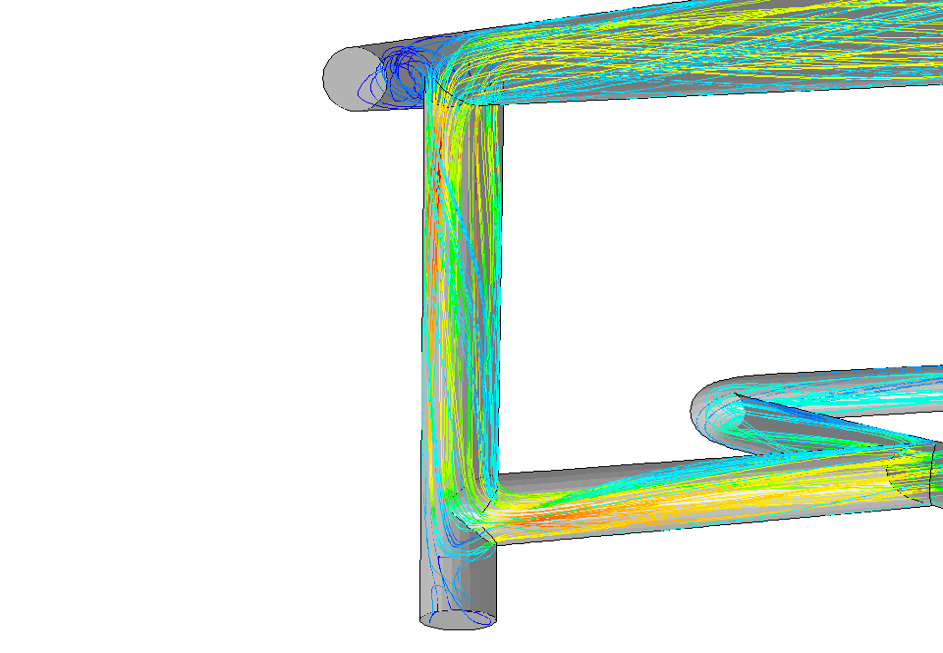
- hydraulic analysis of pipelines – the assessment of flow regime, liquid hold-up, slugging propensity/frequency, liquid surge, wall shear stress, temperature, condensation rate, corrosion
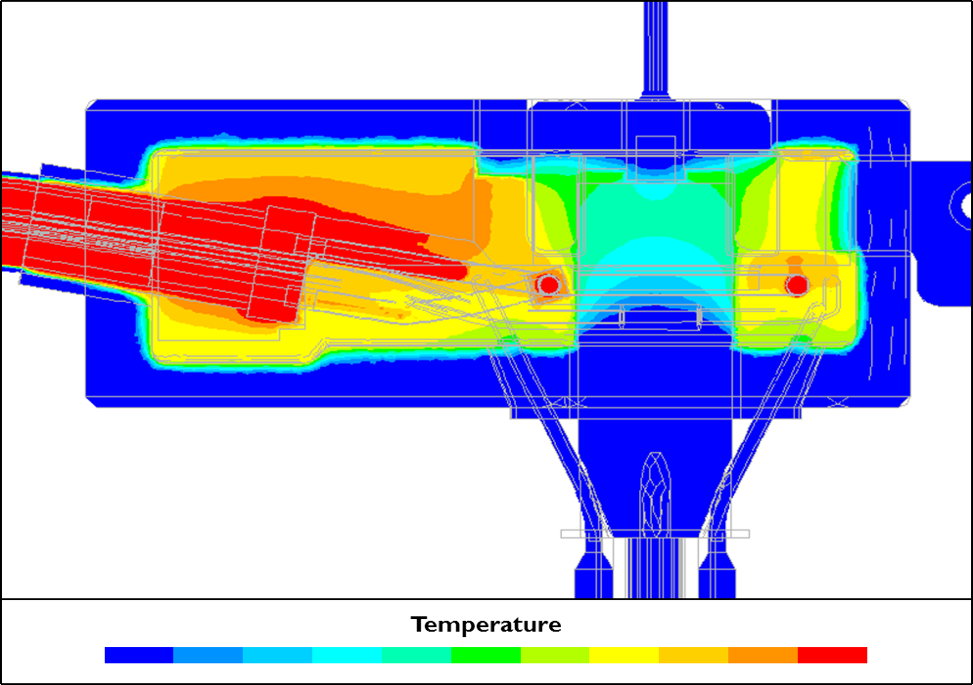
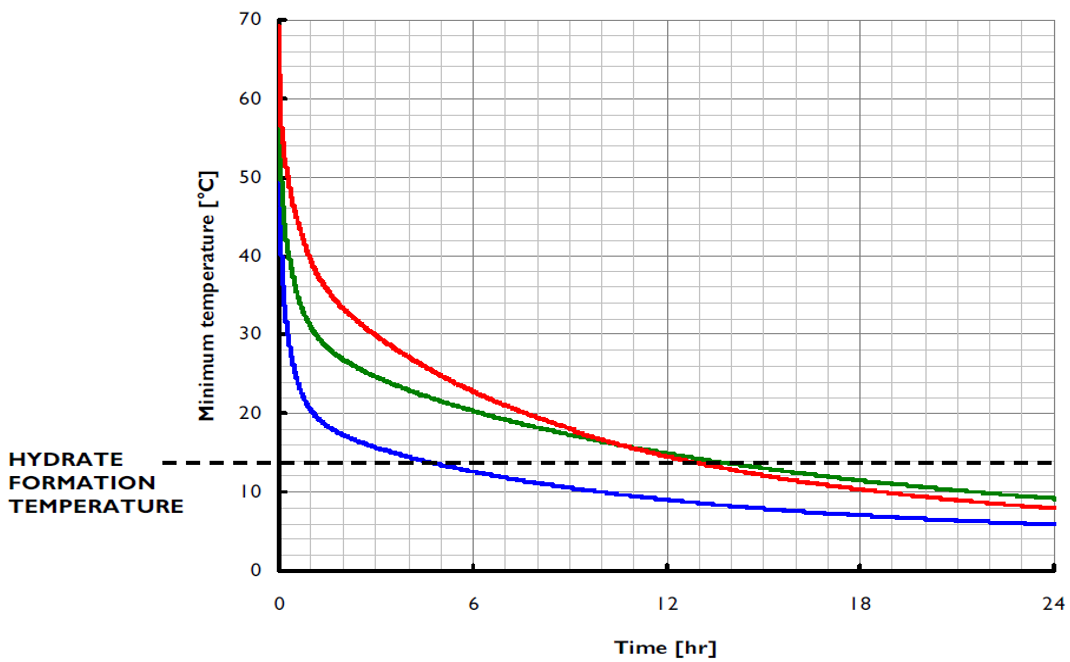
- thermal assessment of complex three-dimensional geometries to assess heat losses during normal operations and cool down times following the cessation of flow – this is important for hydrate/wax avoidance and the associated design and optimisation of thermal insulation
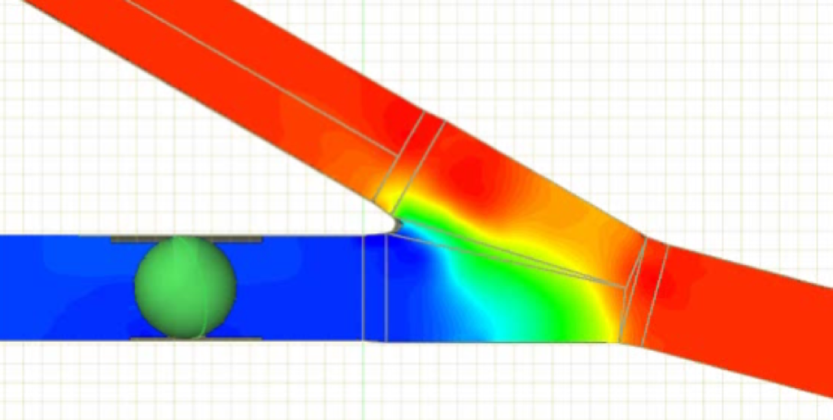
- pigging operations
- erosion due to solids carried by the flow – location of erosion hot-spots and rate of erosion over the life of the field
- compressible flow and Joule-Thomson cooling effects – low-temperature qualification during start-up and assessment of associated thermally-induced stress
- valve behaviour – prediction of pressure-loss Cv curves during steady operation and simulation of dynamic valve closure
- flow-induced vibration (FIV) – vibration/structural loading/fatigue life assessment due to loading induced by internal flow
- positioning of sampling probes in accordance with ISO3171.
Thermal assessment of complex geometries
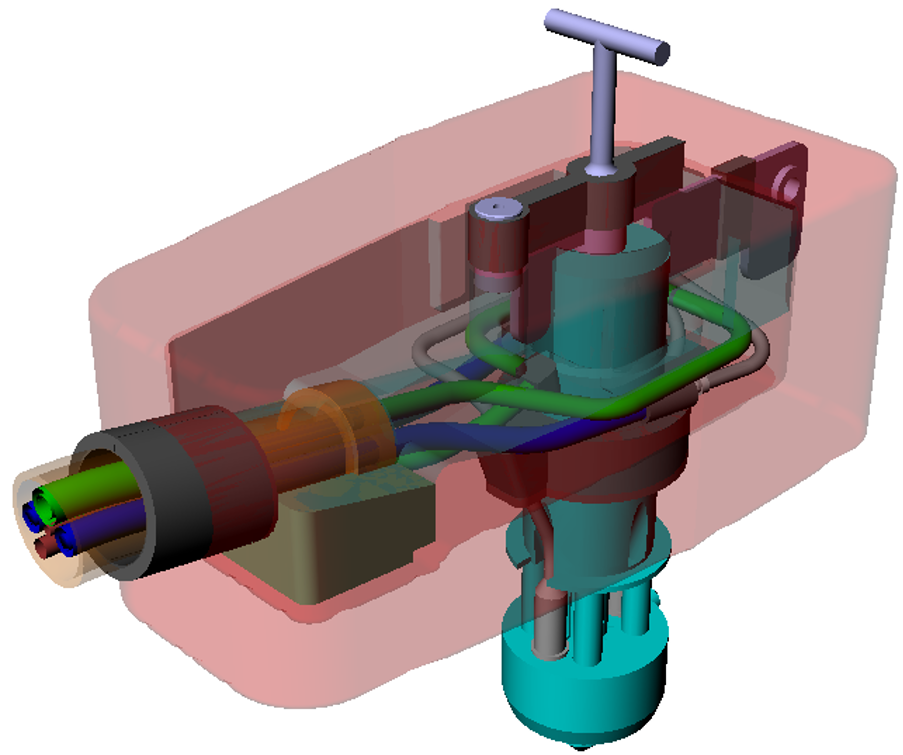
For complex three-dimensional geometries such as that shown for the example below, classical engineering calculations and simpler one-dimensional methods are not able to properly capture the important physics and heat transfer mechanisms, and so 3D CFD is the tool of choice.
Pigging operations